Taking Responsibility Where Others Hesitate
Helveticor shows itself as a Swiss pioneer. Artisanal gold mining has been under public criticism for many years. For many companies, gold mining in Peru, more precisely in Madre De Dios, is a red flag. Environmental risks, illegal mining, and concerns regarding reputation cause most market participants to withdraw completely.
Helveticor takes a different path. We are the first company in Switzerland that has agreed to take responsibility and help work on a responsible solution in Peru. Instead of closing our eyes to the problems, we are committed to providing the local people with safe, health-conscious work and a reliable income.
As an expert in secure logistics and valuable goods transport, it is a central concern for us at Helveticor to take responsibility and make an active contribution to the responsible mining of gold. The current challenges in Peru show us how important professional structures and secure framework conditions are for the miners on site. We are convinced that environmental sustainability and social responsibility must go hand in hand in order to build responsible supply chains.
Three Years of Project Development and Our Contribution
For more than three years now, work has been underway on this project for responsible gold mining. Helveticor partners with the Wyss Academy for Nature primarily through a comprehensive knowledge transfer. Our commitment is based on the firm conviction that the transition to resilient supply chains can only be realized through cross-industry cooperation and mutual support. Our contribution includes the following points:
- Operational Management and Project Practice: Operational input on how a logistics project on site must be managed efficiently and practically
- Security Infrastructure: Specialist knowledge on the security design of transports and collection points
A Future in Which People and Nature Live in Balance
This is the central vision of the entrepreneur and philanthropist Dr. h.c. Hansjörg Wyss. Through the Wyss Foundation and the Wyss Academy for Nature, he works worldwide to permanently protect species-rich ecosystems and create sustainable livelihoods for local communities (Wyss Foundation) (Wyss Academy for Nature). He puts his philosophy into words himself:
“Wild lands and waters are best conserved not in private hands, locked behind gates, but as public national parks, wildlife refuges and marine reserves, forever open for everyone to experience and explore… For the sake of all living things, let’s see to it that far more of our planet is protected by the people, for the people and for all time.”
-Hansjörg Wyss, Gründer
Who is Hansjörg Wyss?
He is an entrepreneur, philanthropist, and committed conservationist. He dedicates his whole life to global innovation and sustainability. This commitment has shown a noticeable impact on a global level. After his long and successful career in medical technology as head of Synthes USA, a company that produces life-saving medical devices, he increasingly dedicated his life to philanthropy. His goal is to bring about long-term positive change.
Mr. Wyss supported, among other things, the founding of the Wyss Academy for Nature in Bern. This academy is committed to sustainable development. With its impact on a local, regional, as well as global level, the Wyss Academy embodies the vision of its founder. With his help, researchers, decision-makers, and communities can come together and work out joint, practical solutions for environmental issues.
What is the Wyss Academy for Nature?
The Wyss Academy is a research, innovation and implementation hub. It transforms scientific and local knowledge into action. Through projects around the world, it brings together researchers, local knowledge holders, policymakers, businesses and communities to co-design and test solutions that benefit both people and nature. In doing so, it seeks to foster a more just and sustainable relationship between people and nature. (Wyss Academy for Nature)
What is the Wyss Foundation?
The Wyss Foundation is a private, non-profit foundation founded by Hansjörg Wyss.The primary goal of the foundation is the global preservation of nature, including in particular land areas and oceans. They also provide support for innovations in research, medicine, and society. (Wyss Foundation)
The Philanthropy of the Wyss Foundation: Approaches, Focus Areas, and Impact
Since its founding in 1998, the Wyss Foundation has pursued the goal of promoting innovative and sustainable solutions that improve people’s lives, strengthen local communities, and permanently protect nature (Wyss Foundation – Philanthropy). To date, the foundation, together with partners, indigenous communities, and governments, has helped to permanently protect over 130 million acres of land and more than 5.7 million square kilometers of ocean.
In 2024 alone, the foundation provided over 222 million US dollars for nearly 130 organizations worldwide. These grant funds are distributed across four central focus areas:
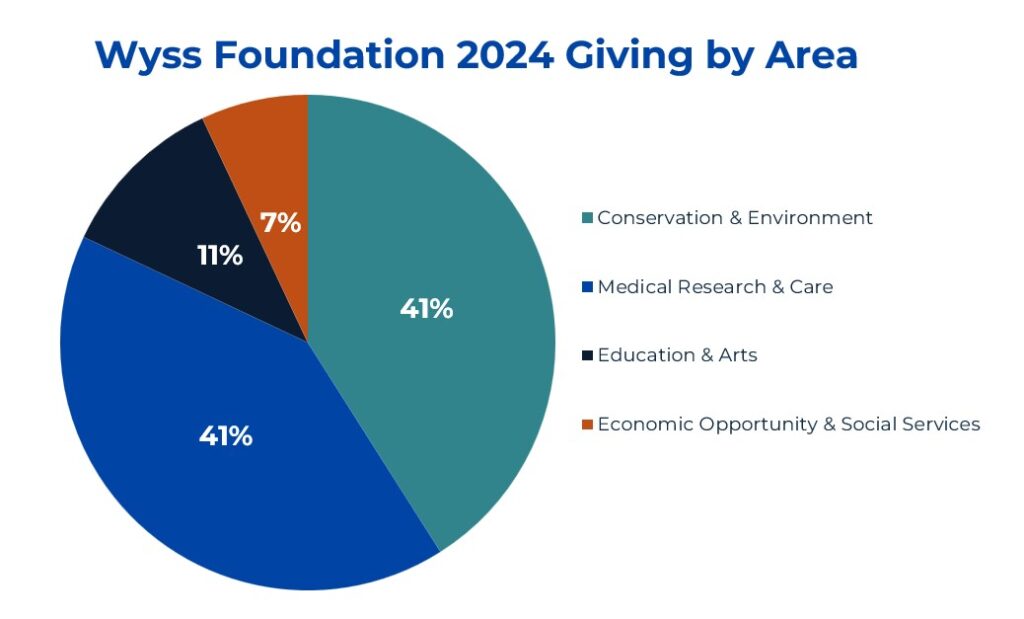
Nature and Environmental Protection (approx. 41%):
The protection of biodiversity is at the center of the foundation’s work. Through the global Wyss Campaign for Nature initiative, more than 1 billion US dollars have already been provided to support the global goal of protecting 30% of the Earth’s land and ocean areas by 2030 (30×30 goal) (Wyss Foundation – Philanthropy). The supported initiatives include, among others, the Andes Amazon Fund to secure species-rich rainforests in South America (including Peru, Colombia, Brazil) as well as projects by The Nature Conservancy and ReWild (Wyss Foundation – Philanthropy).
Medical Research and Healthcare (approx. 41%):
Another core area is the support of medical innovations and the expansion of healthcare services for disadvantaged population groups (Wyss Foundation – Philanthropy). An outstanding example is the Wyss Institute for Biologically Inspired Engineering at Harvard University, which through cross-university research has already produced over 70 start-ups and four thousand patent applications (Wyss Foundation – Philanthropy).
Education and Art (approx. 11%):
The foundation makes targeted investments in training future leaders in the environmental sector through the Wyss Scholars and Wyss Fellows programs (Wyss Foundation – Philanthropy). In addition, it supports prominent cultural institutions such as the Fondation Beyeler in Switzerland and the Museum of Fine Arts Boston (Wyss Foundation – Philanthropy).
Economic Opportunities and Social Services (approx. 7%):
To promote equal opportunities and combat poverty, the Wyss Foundation supports organizations and think tanks that advocate for consumer protection, promote justice, and support financially disadvantaged families. (Wyss Foundation – Philanthropy).
The Visit of Dr. Fernando Fernandez at Helveticor
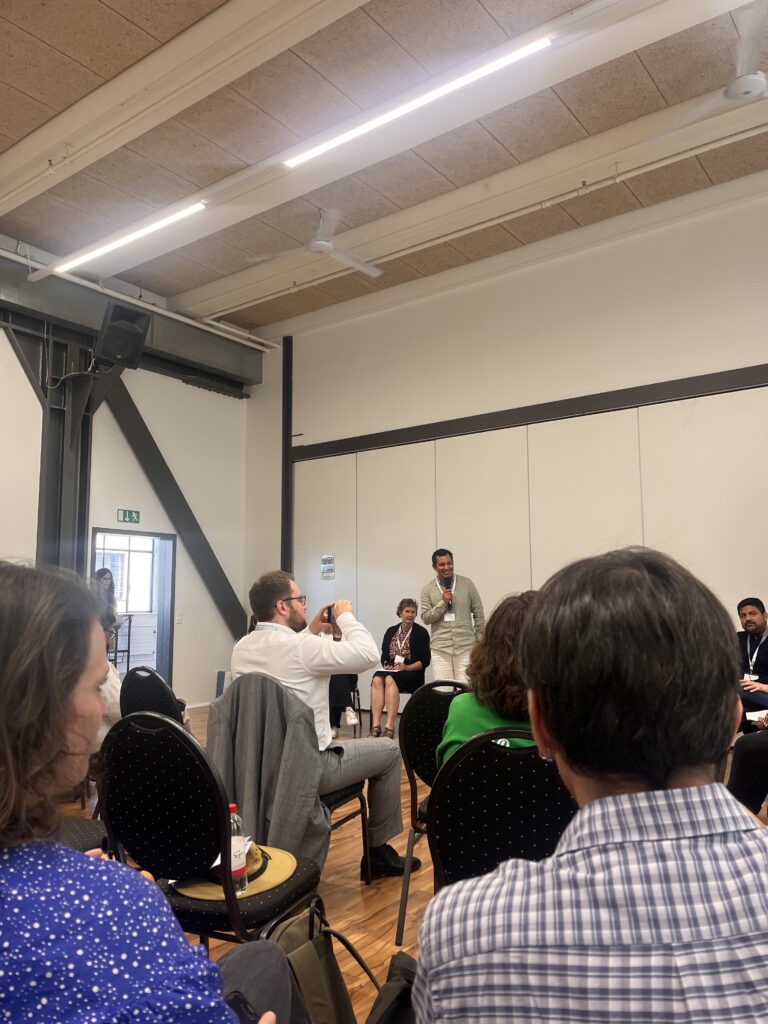
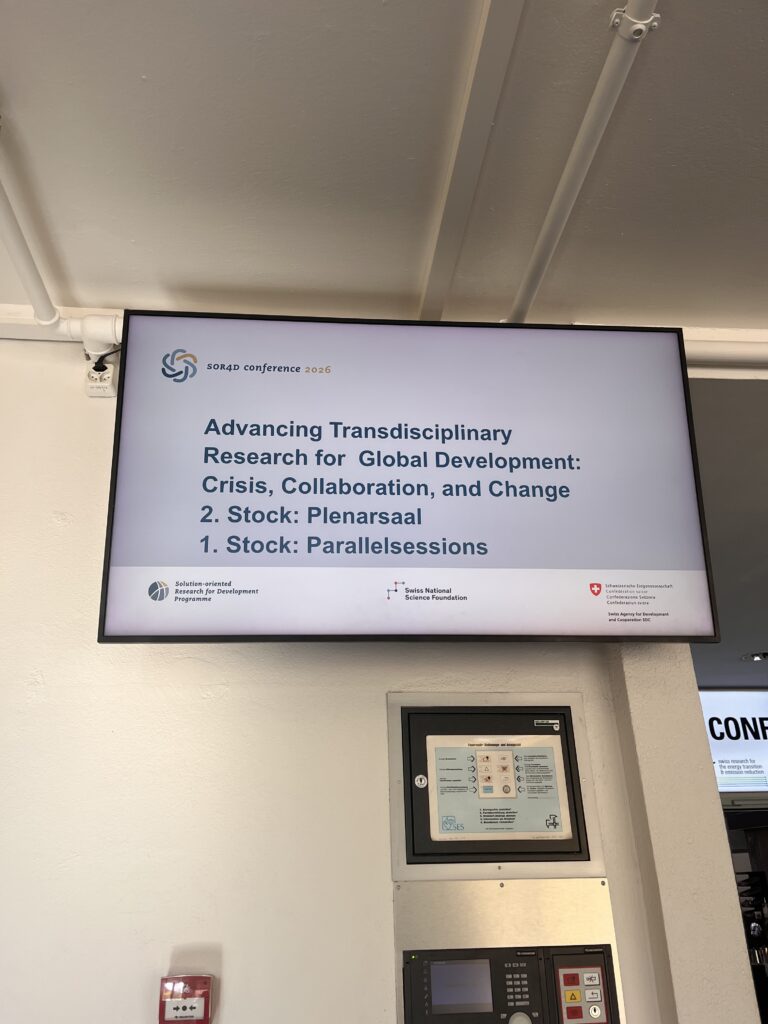
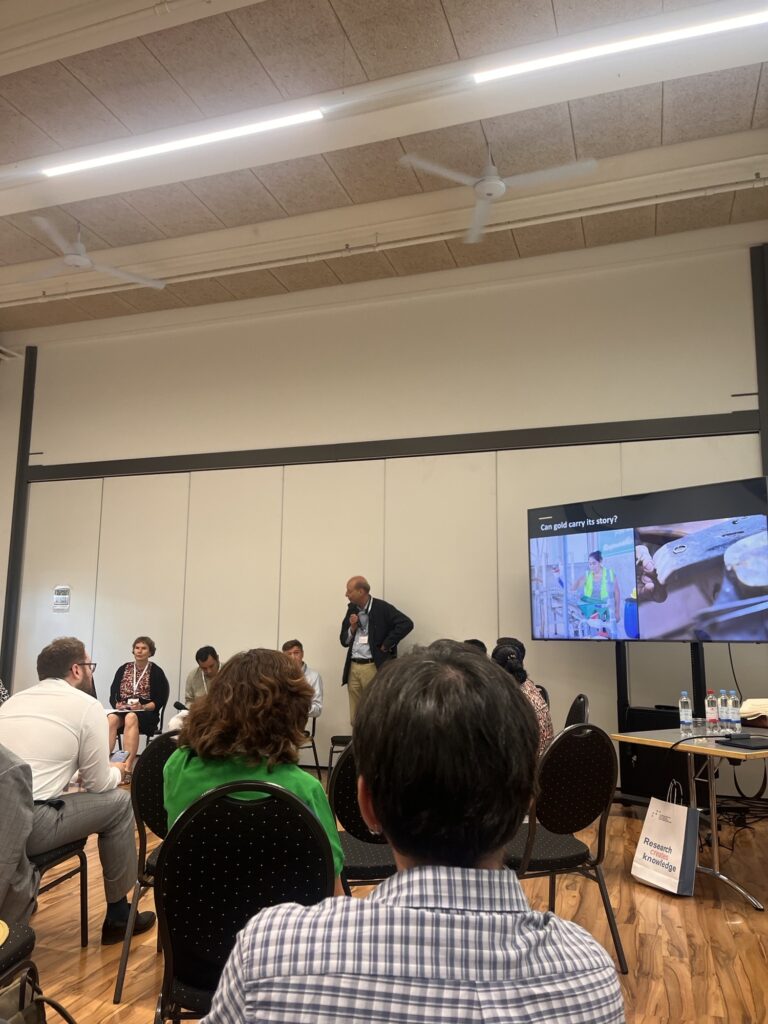
On September 2, we had the pleasure of welcoming Dr. Fernando Fernandez, Senior Research Scientist at the Wyss Academy for Nature, to our premises. The purpose of his visit was an intensively used exchange on how the transition to a responsible gold supply chain in the Madre de Dios region can be implemented in practice. His visit highlighted once again how valuable the integration of scientific research and our logistical practical experience is.
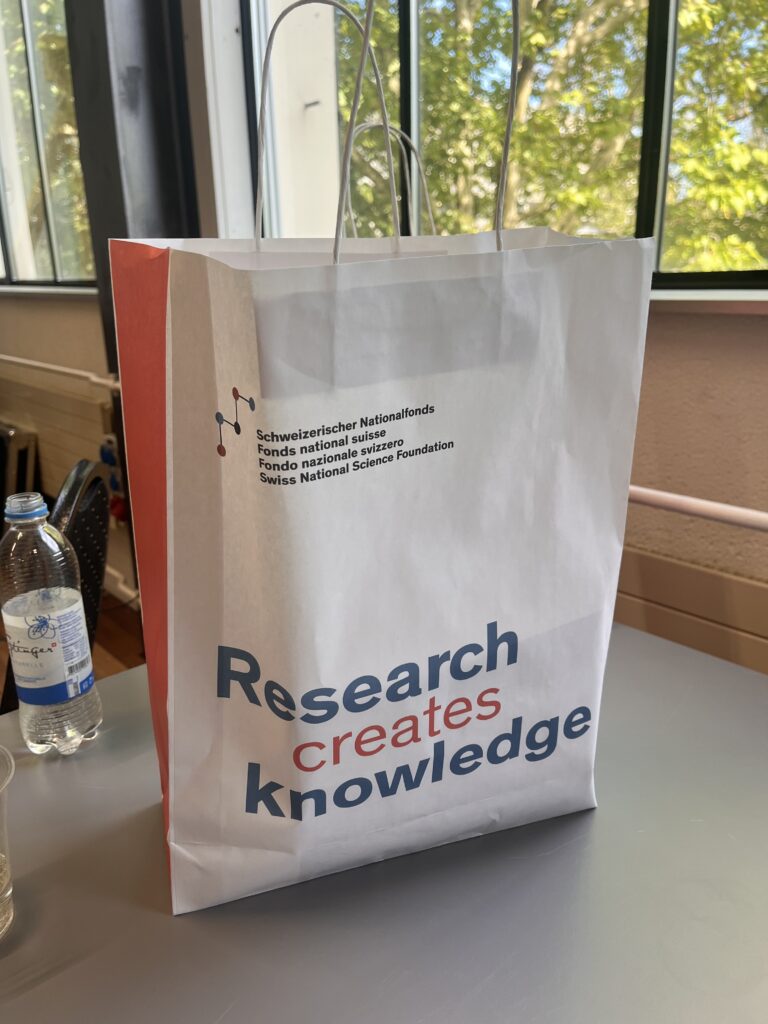
Dr. Fernandez hosted a workshop on responsible mining, among other things, within the framework of the SOR4D program (Solution-oriented Research for Development) (SOR4D Initiative). The SOR4D program is a joint initiative of the Swiss National Science Foundation and the Swiss Agency for Development and Cooperation (SDC) (SOR4D Initiative). It promotes solution-oriented partnerships between researchers from Switzerland and the Global South to make measurable contributions to the Sustainable Development Goals of the United Nations (SDGs)
As part of the SOR4D program, Dr. Fernando Fernandez participates in forward-looking research projects (Advancing Responsible Small-Scale Gold Mining). His scientific work focuses on artisanal and small-scale gold mining, particularly with a view to economic incentive systems, sustainability, and social structures in Peru (Advancing Responsible Small-Scale Gold Mining).
The conference offers a platform for exchange on a wide range of topics, from sustainable supply chains and environmental governance to indigenous land rights and concrete solutions for ecological change in the Global South.
More Swiss presence in Bern
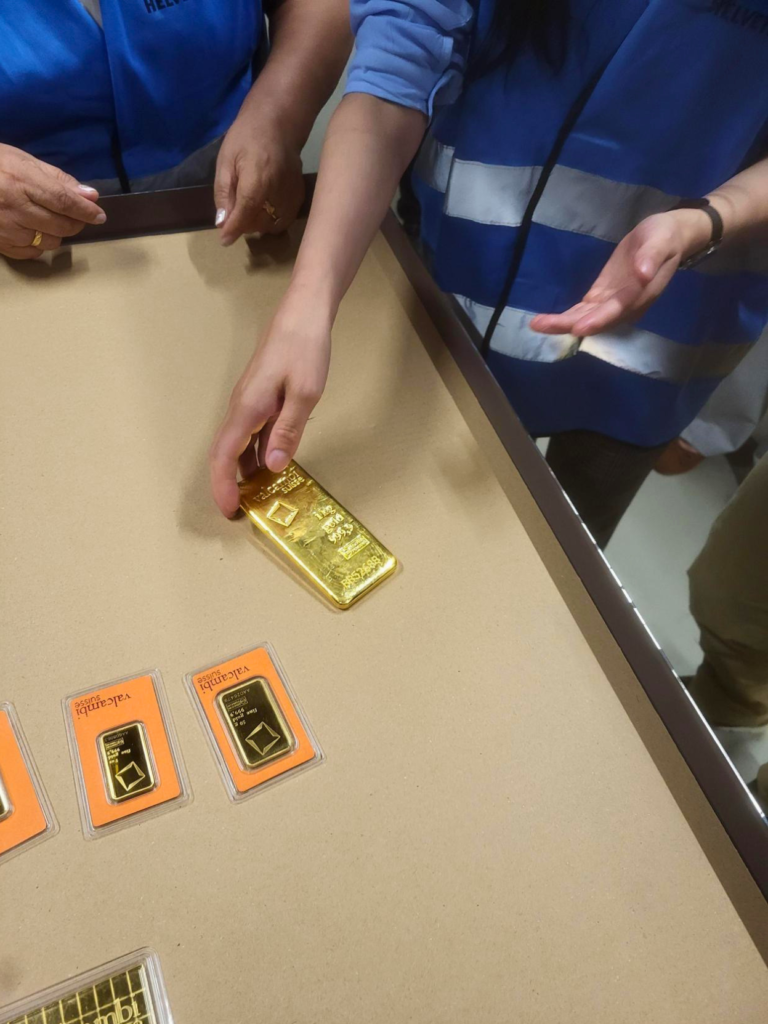
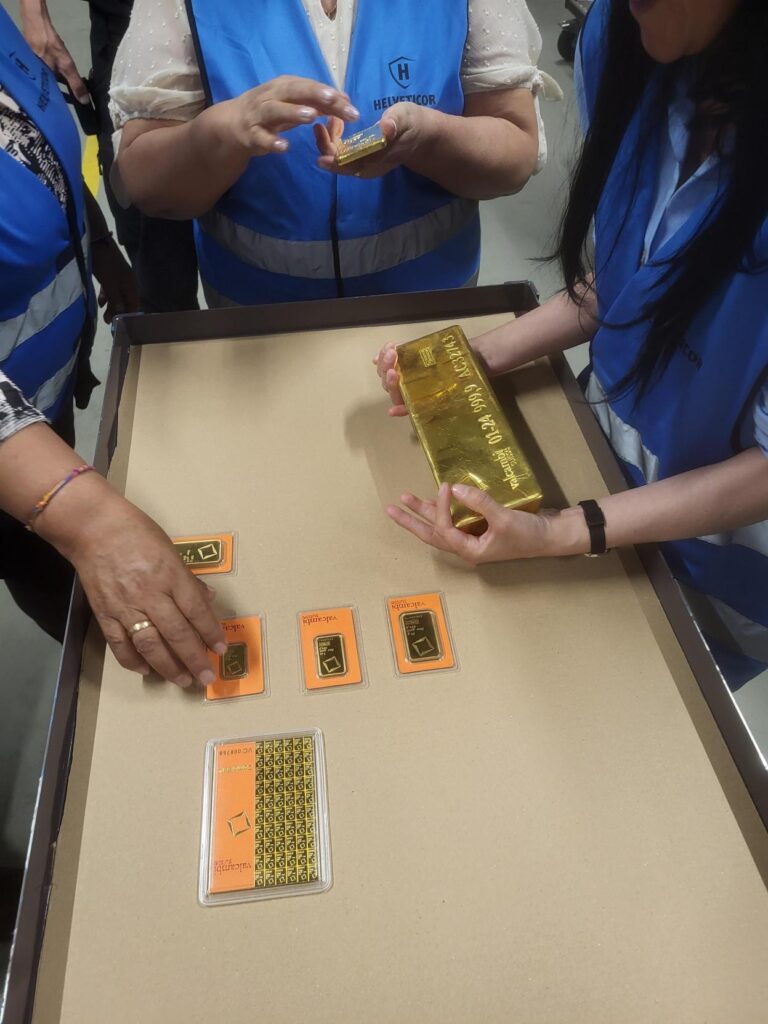
During the SOR4D conference, the Wyss Academy for Nature was accompanied by the Swiss refinery Valcambi, with whom Helveticor closely collaborates. Just like Helveticor, Valcambi is deeply committed to responsible extraction practices, where complete traceability is a top priority for their work.
Alessia Sironi, Head of Laboratory, was the representative for Valcambi in Bern. Even if Valcambi is actually not acquiring any material from the Madre De Dios area, she emphasized that trust and integrity form the foundation of this industry. She highlights that strict adherence to formal processes and standards is essential for building a responsible value chain. Valcambi places great trust in the dedication of the local women in Madre de Dios and they actively support their work, ensuring they know exactly where every purchase of gold comes from.
The Key Behind the Mines in Peru
In many regions of Latin America, it is primarily women who pull the strings in small-scale mining. Contrary to common stereotypes, numerous mining operations are managed and organized by women. They are the true engine for social and ecological changes on site.
Women in Latin American mining often bring a different perspective into the work. They maintain a deep awareness of their environment and act significantly more cautiously and foresightedly when dealing with highly toxic mercury than many of their male colleagues. They are driven above all by the desire to secure a healthy future for their children, families, and local community. For this reason, they want to improve and develop the working and living conditions in mining.
As part of our cooperation, alongside the representatives of the Wyss Academy for Nature, we are also pleased to welcome a delegation of female miners to Helveticor. One of them is Lucila Huanca, an outstanding entrepreneur and pioneer for responsible mining in Peru.
Courage for Change: The Example of Lucila Huanca
Lucila Huanca impressively demonstrates how change works in practice. In her small mine, she completely avoids the use of mercury, even though the substance is still not legally banned in Peru. To take this step, she had to show great commitment and courage.
- High Investments: She invested a lot of money to adopt modern, environmentally friendly technologies and to train and educate the employees on site.
- Process Change: All processes in her mine had to be fundamentally restructured and built up.
- Success: Courage and risk paid off for Lucila. Today, her operation proves that responsible and healthy gold mining works.
For us at Helveticor, it is a matter of course to support courageous women like Lucila Huanca and her fellow campaigners. By bringing in our knowledge of secure valuable goods transport, logistics, and supply chains, we help strengthen the valuable work of these women and enable their responsibly mined gold to enter the international market.
The Current Situation of Gold Mining in Peru
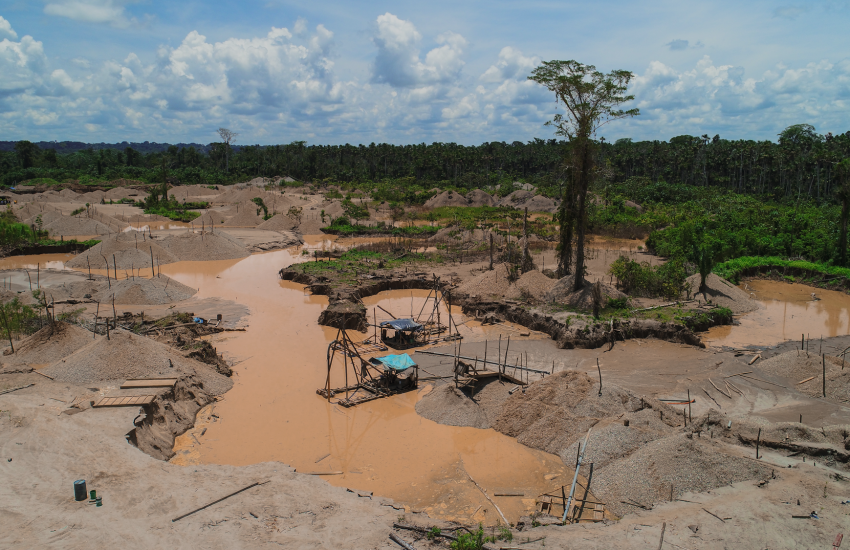
Madre De Dios is seen as Peru’s capital of biodiversity and cultural diversity. It belongs to one of the most diverse ecosystems in the world. However, artisanal gold mining in Peru, specifically in the Amazon region of Madre de Dios, highlights the pressing conflicts between economic survival, environmental destruction, and global trade. (History of Mining in Madre de Dios).
Deforestation and Illegal Mining: In recent decades, the gold boom in Madre de Dios has led to severe deforestation and the destruction of fragile rainforest ecosystems (History of Mining in Madre de Dios). Despite increased government raids and inspections, it remains difficult to stop illegal gold mining, which represents a huge challenge for the Peruvian authorities. (Global Conservation Report).
The Mercury Problem: A central environmental and health problem is the use of mercury in gold mining. The heavy metal enters water bodies and food chains, exposing fish, workers, as well as the local population, especially indigenous communities, to extremely high health risks (IUCN – Mercury in Madre de Dios). The local people who rely on natural resources can no longer use them easily and without risks.
Swiss Trade Relations: As a global hub for gold refining, Switzerland plays an important role in the global gold trade. Therefore, there is a high level of interest on the Swiss side in ensuring transparency and sustainability in the supply chain from countries like Peru.
Structural Market Failure and the REINFO System: Current analyses show a deep structural market failure on site. Responsibly produced gold without mercury often achieves the same price on local markets as illegally mined gold. Miners who invest in clean technologies incur higher costs, but receive no financial compensation locally for doing so. In addition, the Peruvian register for the formalization of mining (REINFO) has been extended several times since 2016. As a result, while it offers legal protection against prosecution, it often leads to a state of uncertainty without achieving real progress in environmental and labor standards.
Research and Logistics Know-How Go Hand in Hand
Sustainable change does not happen by looking away, but through decisive action. While Peru remains a taboo topic for many companies, the collaboration between Helveticor and the Wyss Academy for Nature shows how it really works. Through targeted knowledge transfer from the logistics and security industry, we support the Wyss Academy in creating fair and ecological alternatives for the miners in Madre de Dios. Step by step, a future is created in which ecological responsibility, social security, and practical logistics interlock and form a shared foundation.